Scratch-Resistant Protection
Helps reduce light scratches, contact marks and everyday surface wear on protected panels.
Premium Paint Protection Film for car owners who want to preserve the original finish against everyday road exposure, stone chips, light scratches and environmental contaminants.
Share your car model and preferred coverage to discuss suitable PPF options.
PPF is a physical protective film, not simply a surface coating. The right film helps absorb everyday exposure before it reaches the original paint.
Helps reduce light scratches, contact marks and everyday surface wear on protected panels.
Creates a physical barrier between painted surfaces and everyday road exposure.
Selected premium PPF products may carry warranties of up to 12 years, subject to the specific film and manufacturer terms.
Helps protect exposed surfaces from road debris, insects, contaminants and everyday driving conditions.
Selected PPF products use self-healing surface technology that can help reduce the appearance of certain light surface marks under suitable heat conditions.
VINYLED offers multiple PPF brands and finish options. Warranty periods vary by the exact film selected, so the product-specific warranty should always be confirmed before installation.
Gloss films are available with 5, 7, 8 and 10-year warranty options; matte is available with a 7-year option.
A gloss PPF option with a 5-year warranty, suited to owners comparing protection and overall budget.
Gloss and matte films are available with 5, 7 and 10-year warranty options depending on the product.
Gloss, matte and satin options are available, with warranty terms varying by product and application.
Warranty note: Warranty coverage is product-specific and can depend on installation, maintenance and manufacturer terms. VINYLED provides warranty-backed installation for eligible products; confirm the exact warranty period and coverage for your selected film before installation.
A straightforward explanation of Paint Protection Film and what it actually does for your vehicle.
Paint Protection Film (PPF) is a flexible protective film installed over painted vehicle panels. Once applied, it creates a physical layer between the original paint and the outside environment.
This makes PPF fundamentally different from ceramic coating. A coating changes the surface properties of the paint, while PPF adds an actual protective film over the surface.
Depending on the product, modern TPU PPF can provide optical clarity, flexibility, durability, different finishes and self-healing surface technology.
Everyday driving exposes the front and side surfaces of a car to road debris, dust, insects, traffic movement, accidental contact and environmental contaminants.
Highway driving can increase exposure to stone chips around the front bumper, bonnet, fenders and mirrors. City driving brings a different combination of dust, traffic and repeated washing.
PPF gives owners a way to protect important painted surfaces without permanently changing the original paint.
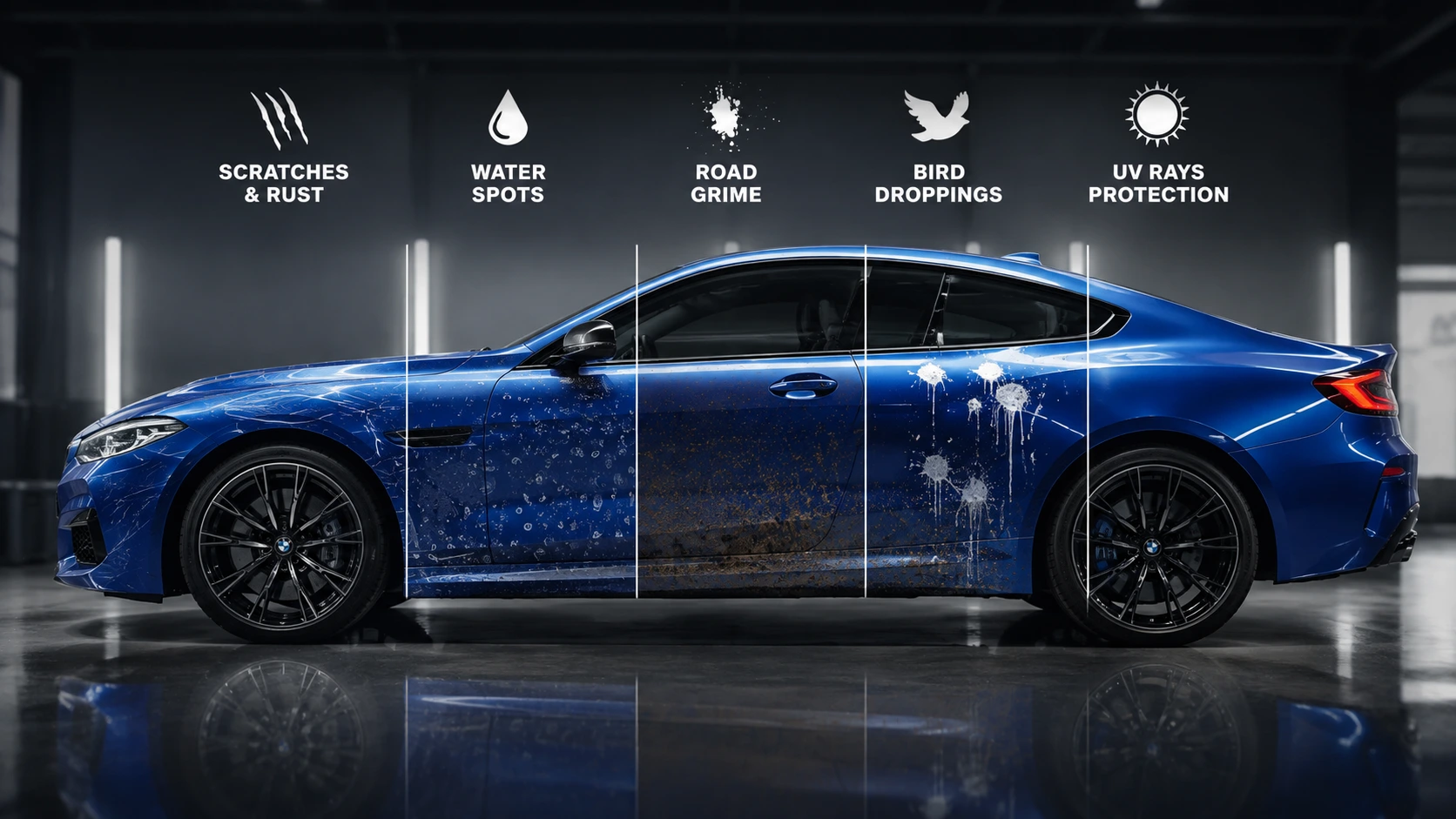
The right coverage depends on your vehicle, how you drive and how much of the original paint you want to preserve.
PPF is no longer limited to a single transparent appearance. Your finish can be selected around the look you want for the car.
Colour PPF is designed for owners who want styling and physical paint protection in the same film system.
Unlike a traditional clear PPF installation, colour PPF can change the visual appearance of the vehicle while still providing a protective film layer over the painted surface.
Depending on the available product, colour directions may include black, blue, red, white, green, grey and other automotive finishes.
Colour PPF is useful when you want a more individual look without relying on permanent repainting.
PPF pricing depends on the vehicle and the installation, not simply on the name of the package.
| Factor | Why it affects cost |
|---|---|
| Vehicle size | Larger vehicles generally require more material and installation time. |
| Coverage | Front-end, extended and full-car coverage involve different amounts of film. |
| Film type | TPU construction, optical performance, finish and product technology vary. |
| Finish | Clear, gloss, matte, satin and colour films can have different product costs. |
| Installation complexity | Complex body lines and detailed finishing can increase working time. |
There is no single PPF price for every car.
The most accurate recommendation comes from the vehicle, desired coverage and the film you want to use.
This approach helps you compare PPF options based on actual protection rather than choosing a package only because it has the lowest price.
The two products are often compared, but they are designed to perform different jobs.
| Feature | PPF | Ceramic Coating |
|---|---|---|
| Physical protective film | Yes | No |
| Stone-chip protection | Stronger | Limited |
| Light scratch protection | Stronger | Limited |
| Gloss / surface enhancement | Product dependent | Strong |
| Primary role | Physical paint protection | Surface protection and easier maintenance |
Choose PPF when physical protection is the priority. Choose ceramic coating when surface enhancement, gloss and easier maintenance are the main goals. In some cases, both can be used together.
PPF is designed to create a physical protective barrier over painted surfaces. It is the more suitable starting point when the primary goal is protecting original paint.
A car wrap is primarily designed to change the colour and appearance of the vehicle. It should not be treated as a direct replacement for dedicated paint protection film.
A good result depends on what happens before the film is applied, not only on the final appearance.
Review the paint, panel condition, vehicle shape and required protection areas.
Clean and prepare the surface so the film has a proper installation foundation.
Position and apply the selected film carefully across the required panels.
Refine edges, corners, panel transitions and detailed areas for a cleaner final result.
Inspect the completed installation before the vehicle is returned to the owner.
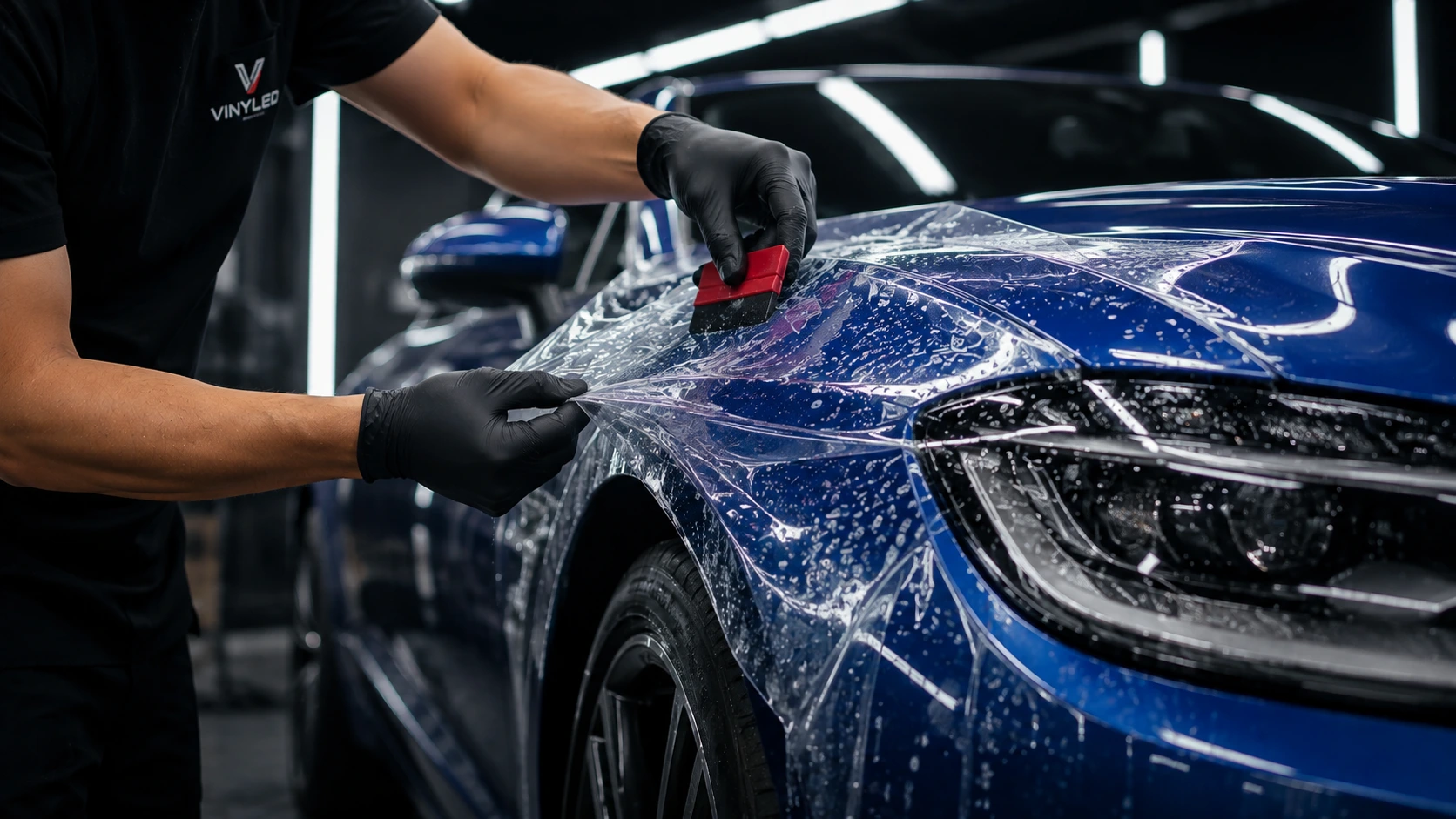
Even a premium film can look poor when preparation, alignment and finishing are not handled correctly.
Proper surface preparation creates a better foundation for the installation.
Good positioning helps the film follow the vehicle's original panel lines.
Clean edges and corners make a major difference to the finished appearance.
A clean installation environment helps reduce visible contamination.
Complex body shapes require careful application and finishing decisions.
Inspection before delivery helps identify concerns while the installation is still under review.
PPF lifespan depends on the film, installation quality, vehicle use, maintenance, environmental exposure and the product-specific warranty. Different films can have different expected service lives.
Follow the recommended curing guidance after installation. Use gentle washing methods, avoid aggressive pressure around edges and remove bird droppings, tree sap, insects and similar contaminants promptly.
Professionally installed PPF does not normally damage healthy factory paint. However, the condition of the panel matters.
Previously repainted panels, weak paint, existing damage, poor-quality bodywork or compromised surfaces should be assessed before installation.
Professional removal is also important, especially where a panel has previous paintwork or other surface concerns.
PPF is not necessary for every driver. It becomes more valuable when preserving the original finish is a priority.
Protect the original factory finish from the beginning of ownership.
Preserve visually important and expensive painted surfaces.
Useful for vehicles regularly exposed to city traffic, dust and road conditions.
Front-facing panels can experience repeated stone-chip and road-debris exposure.
VINYLED combines automotive protection, product selection, careful installation and structured aftercare.
Practical experience across vehicle protection and automotive styling.
Film selection based on product characteristics, finish and intended application.
Preparation, application, edge finishing and detailed final inspection.
Clear maintenance guidance to help preserve the installation after delivery.
Clear answers about Paint Protection Film, TPU PPF, cost, coverage, finishes, installation and maintenance.