Heat-Control Film
Designed to reduce solar heat entering the vehicle and improve overall cabin comfort.
Automotive window film designed to help manage solar heat, reduce glare and improve cabin comfort while keeping the vehicle's appearance clean and refined.
Sunfilm, also called automotive window film or solar-control film, is applied to vehicle glass to change how solar energy and light pass through the windows.
A suitable automotive window film can help reduce solar heat, glare and ultraviolet transmission while improving the comfort of passengers inside the vehicle.
The right film depends on what matters most to you: heat rejection, glare control, UV reduction, appearance, visibility or a combination of these factors.
Window film is different from PPF and ceramic coating. It is a solution designed specifically for vehicle glass, not painted body panels.
Good automotive window film is not simply about making the glass darker. The film should be selected according to the vehicle, glass, driving conditions and desired result.
In Bangalore's bright daytime conditions, reducing solar heat and glare can make the cabin feel more comfortable during daily commuting and longer drives.
The right installation also matters. Clean glass, correct film positioning and careful edge finishing contribute to a better-looking result.
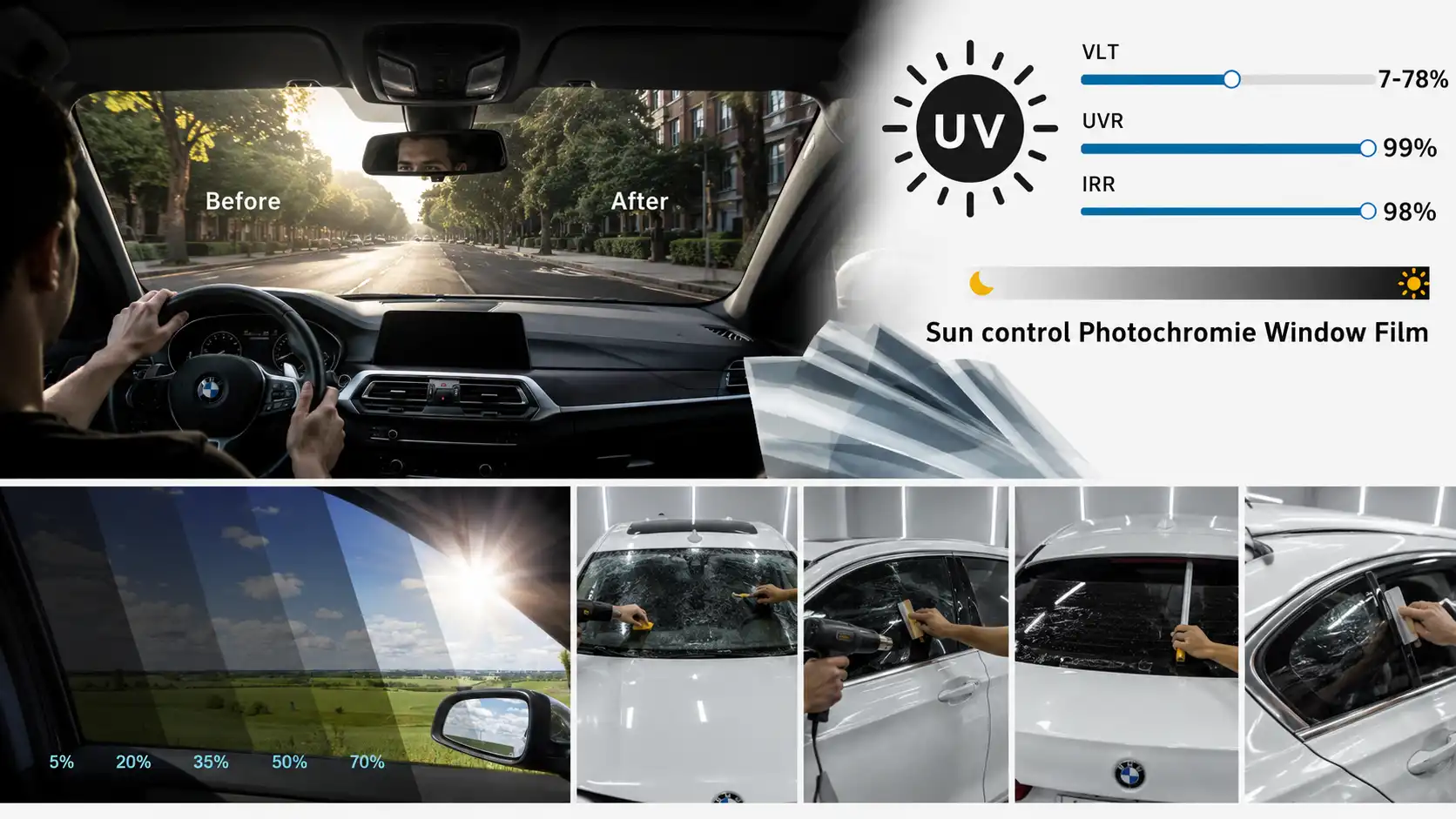
Different automotive films are designed with different performance characteristics and visual finishes.
Film selection should be based on performance, visibility, glass compatibility and the intended use of the vehicle.
VLT means Visible Light Transmission. It describes how much visible light passes through the glass. A lower VLT generally means darker glass and less visible light transmission.
Under current Rule 100 of the Central Motor Vehicles Rules, vehicle windscreens and rear windows are required to maintain at least 70% visual light transmission, while side windows are required to maintain at least 50%. :contentReference[oaicite:1]{index=1}
There are also Supreme Court directions concerning the pasting of films or other material on vehicle safety glass. Therefore, do not choose a film based only on darkness or appearance. Confirm the current requirements applicable to your vehicle and location before installation. :contentReference[oaicite:2]{index=2}
VINYLED can help explain film specifications and VLT considerations, but customers should verify current road-use requirements before selecting a window-film product.
Choose automotive window film when your main concern is solar heat, glare, UV reduction, cabin comfort or the visual treatment of vehicle glass.
Choose PPF when your priority is protecting painted body panels from physical road exposure, stone chips and everyday paint damage.
Pricing depends on the vehicle, glass area, film technology and installation requirements.
| Factor | Why it matters |
|---|---|
| Vehicle type | Sedan, SUV, luxury car and larger vehicles have different glass areas and installation requirements. |
| Film technology | Different films can vary in heat-control, optical and UV-performance characteristics. |
| Glass coverage | The number and size of windows included changes material and installation time. |
| Film specification | VLT, colour, construction and performance specifications can affect product selection. |
| Installation complexity | Curved glass, edges, trims and vehicle-specific access can affect labour requirements. |
There is no single sunfilm price for every car.
The right product should be selected based on the vehicle, film specification, intended use and applicable road-use requirements.
A proper assessment helps you compare films by performance rather than choosing only by darkness or price.
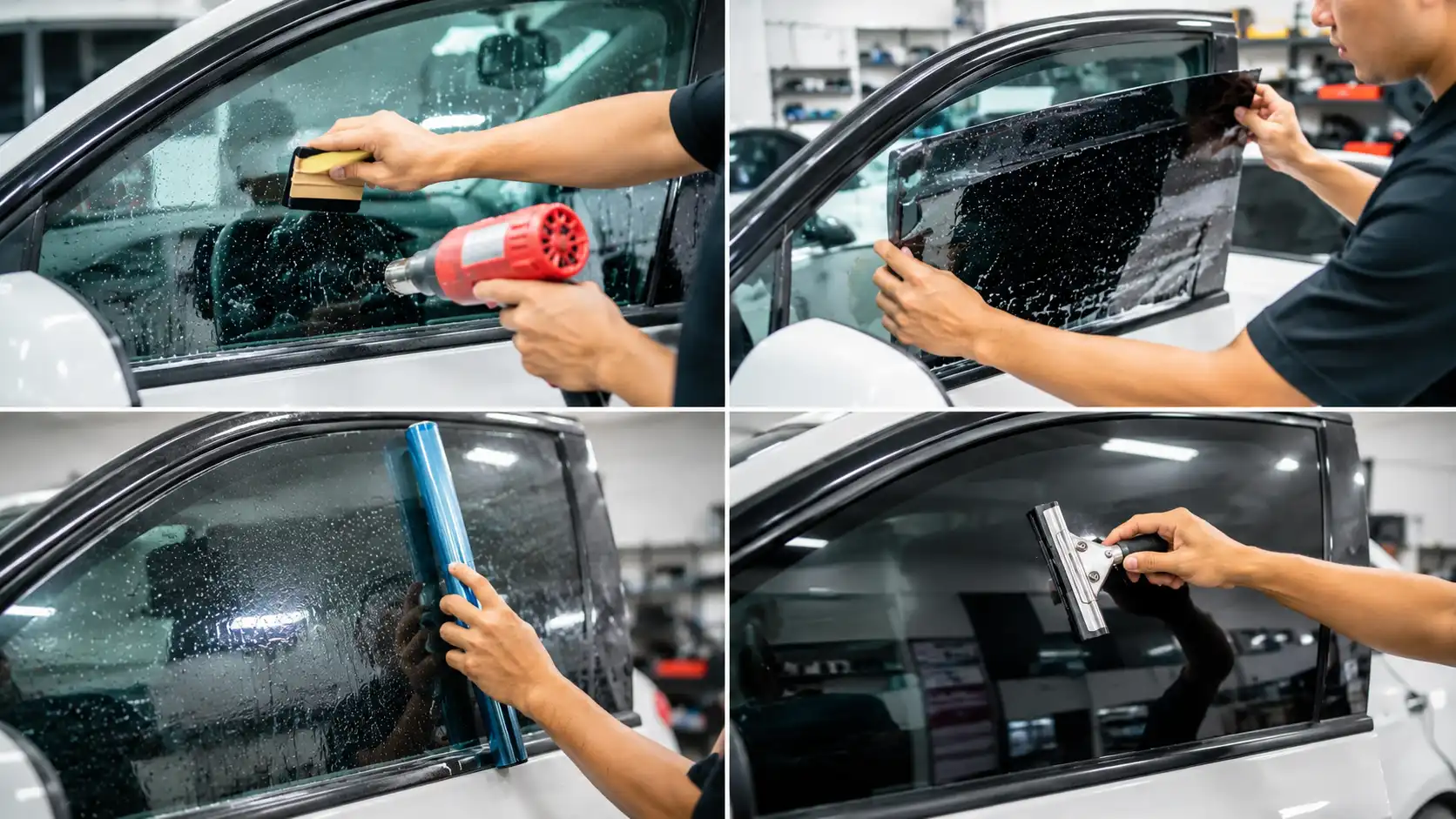
Clean preparation and accurate application are essential for a smooth, clear and properly finished result.
Check the glass, existing tint, edges, trims and installation requirements.
Thoroughly clean the glass and remove surface contamination.
Position and apply the selected film carefully across the required glass surfaces.
Refine edges, remove installation moisture and inspect the completed glass before delivery.
Follow the recommended initial curing period for the installed product. Clean treated glass gently using suitable automotive glass-cleaning products and a clean microfiber cloth. Avoid scratching, scraping or using abrasive tools on the film surface.
Film lifespan depends on product quality, glass exposure, installation, climate, cleaning and environmental conditions. Different films have different expected service lives and warranty terms.
A good result depends on the film, preparation, application and final inspection.
Choose around heat control, visibility, appearance and vehicle requirements.
Proper glass preparation helps create a cleaner, more consistent installation.
Careful application and edge finishing improve the overall appearance of the installed film.
We explain film specifications, VLT considerations and aftercare before delivery.
Clear answers about heat control, UV protection, VLT, pricing, installation, maintenance and regulations.